
The Dala Horse: Sweden’s First Under New EU GI Protection
- Firstpage
- IP & Trademarks
- Legal Case Files

Sweden’s iconic Dala horse has become the first Swedish product to be registered under the EU’s new geographical indication system for craft and industrial products. The registration shows how the new framework can help protect traditional craftsmanship and the reputation associated with a particular region.
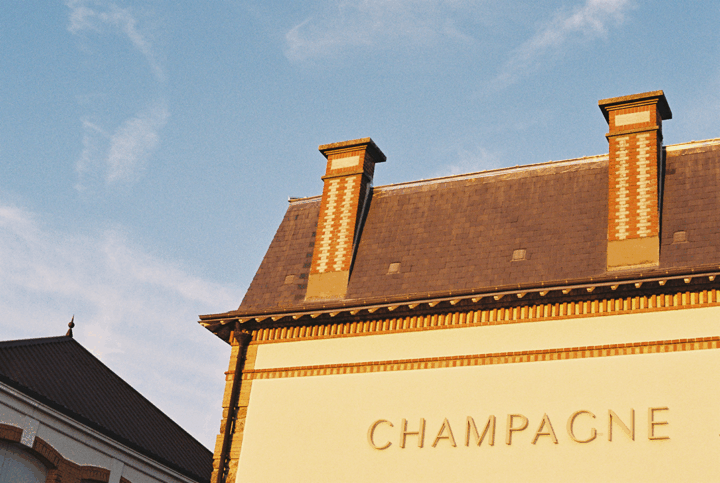
From Champagne to Dala Horses
Geographical indications have long been part of the European intellectual property landscape. Best known through products such as Champagne, Parmigiano Reggiano and Scotch Whisky, they have traditionally been associated with food and beverages.
Put simply, a geographical indication (GI) protects a product name associated with a particular place. To qualify for protection under the new system for craft and industrial products, the product must originate from a specific geographical area, have a quality, reputation or other characteristic essentially attributable to its geographical origin. At least one production step must also take place within that area.
But geographical reputation is not limited to food and drink. Many traditional crafts owe their distinctive character and reputation to the places where they have developed over generations.
Recognising this, the EU has extended GI protection to a new category of products. Regulation (EU) 2023/2411, applicable since 1 December 2025, introduced an EU-wide system for protecting geographical indications for craft and industrial products, including textiles, jewellery, ceramics, glassware and traditional handicrafts.
The Dala Horse Under EU Protection
In Sweden, the first product to benefit from this new framework is the Dala horse.
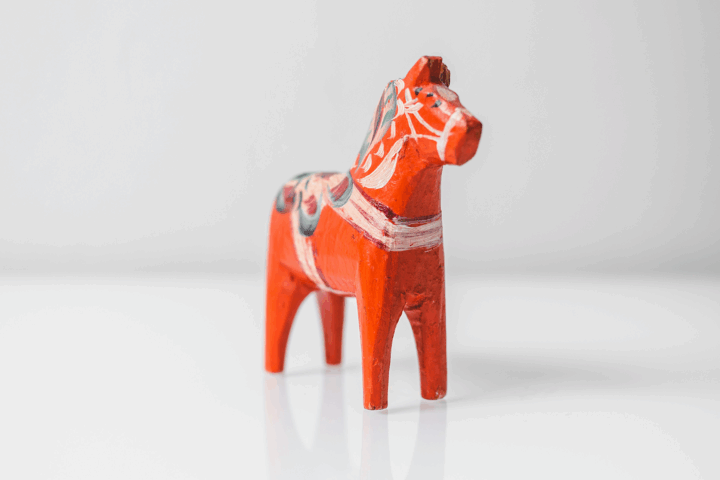
The Dala horse (Dalahäst) is one of Sweden’s most recognisable cultural symbols. Its origins trace back several centuries to the villages around Mora in Dalarna, where woodworkers carved wooden horses as toys, traditionally using leftover pieces of wood.

Over time, the simple wooden figures developed into the brightly coloured horses we recognise today, decorated with distinctive kurbits-inspired patterns. The Dala horse gained international recognition at the 1939 New York World's Fair, where a large red horse stood outside the Swedish pavilion.
Today, the tradition remains particularly associated with the village of Nusnäs, where Dala horses continue to be carved and painted by hand.
On 4 November 2026, the Swedish Intellectual Property Office (PRV) announced that the Dala horse had been registered as a protected geographical indication (PGI) by the European Union Intellectual Property Office (EUIPO). The registration followed an initiative by two established manufacturers, Grannas A. Olsson Hemslöjd AB and Nils Olsson Dalahästar AB.
Importantly, the registration does not give either manufacturer exclusive rights to the protected designation. Other producers may also use it, provided their products comply with the applicable geographical and production requirements.
The Dala horse illustrates the connection between geographical origin, traditional craftsmanship and reputation. Its identity is closely associated with Dalarna and with the skills and production traditions developed there over generations.
What does GI protection actually mean?
A trade mark generally tells consumers who is behind a product or service. A GI, by contrast, identifies a product as originating from a particular place, where a quality, reputation or other characteristic is essentially attributable to that origin.
For traditional craft products, this distinction matters. Consumers may associate a particular region with specific production methods, craftsmanship or standards of quality. GI protection helps safeguard that connection, while allowing producers who meet the relevant requirements to benefit from the reputation associated with the protected designation.
When geography is only part of the story
The Dala horse is Sweden’s first registration under the new system, but it may not be the last. Other traditional Swedish crafts, such as Lovikka mittens, could also be of interest for geographical indication protection. The new framework also raises questions about its potential application to other types of handicrafts, including indigenous crafts.
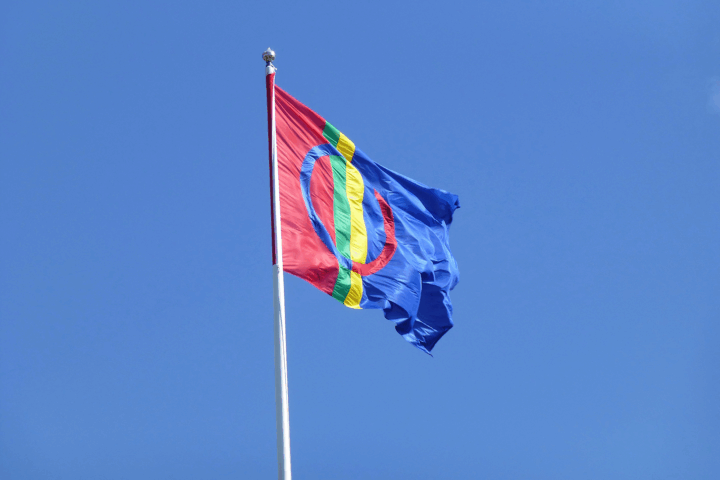
One example is duodji, traditional Sámi craftsmanship, which encompasses knowledge, skills and practices passed down through generations and developed by Sámi craftspeople today. It is a living part of Sámi culture, with traditions that continue to be practised and developed today.
For indigenous craftsmanship, however, geographical origin may be only part of what gives a product its significance. Traditional knowledge, cultural identity and the communities behind the craft may be equally important.
Geographical Indication protection could offer new opportunities for certain traditional craft products. Applying it in an indigenous context raises questions about how to define the relevant geographical area, what production requirements should apply, and who should be entitled to use the protected designation.
The Dala horse demonstrates how the new EU framework can help safeguard the geographical reputation of traditional craftsmanship. At the same time, its potential application to indigenous craft traditions highlights an important distinction: protecting where a product comes from is not necessarily the same as protecting the cultural heritage it represents.
Key Takeaways
- The Dala horse is Sweden’s first product registered under the EU’s new geographical indication (GI) system for craft and industrial products, showing how the framework can protect traditional craftsmanship linked to a specific place.
- GI protection does not give one producer ownership of the craft itself. It protects the geographical designation and can be used by producers that meet the relevant requirements.
- GI protection can complement trade marks, design rights and copyright, with each protecting different aspects of a product.
- For indigenous crafts, geography may be only one part of the picture. Cultural identity, traditional knowledge and community ownership may require broader consideration than GI protection alone can provide.

Contact Us
Do you want consulting, advice or are interested in any of our legal services? Contact us and we will help you!