


Win the Inbox Battle with a Verified Mark Certificate
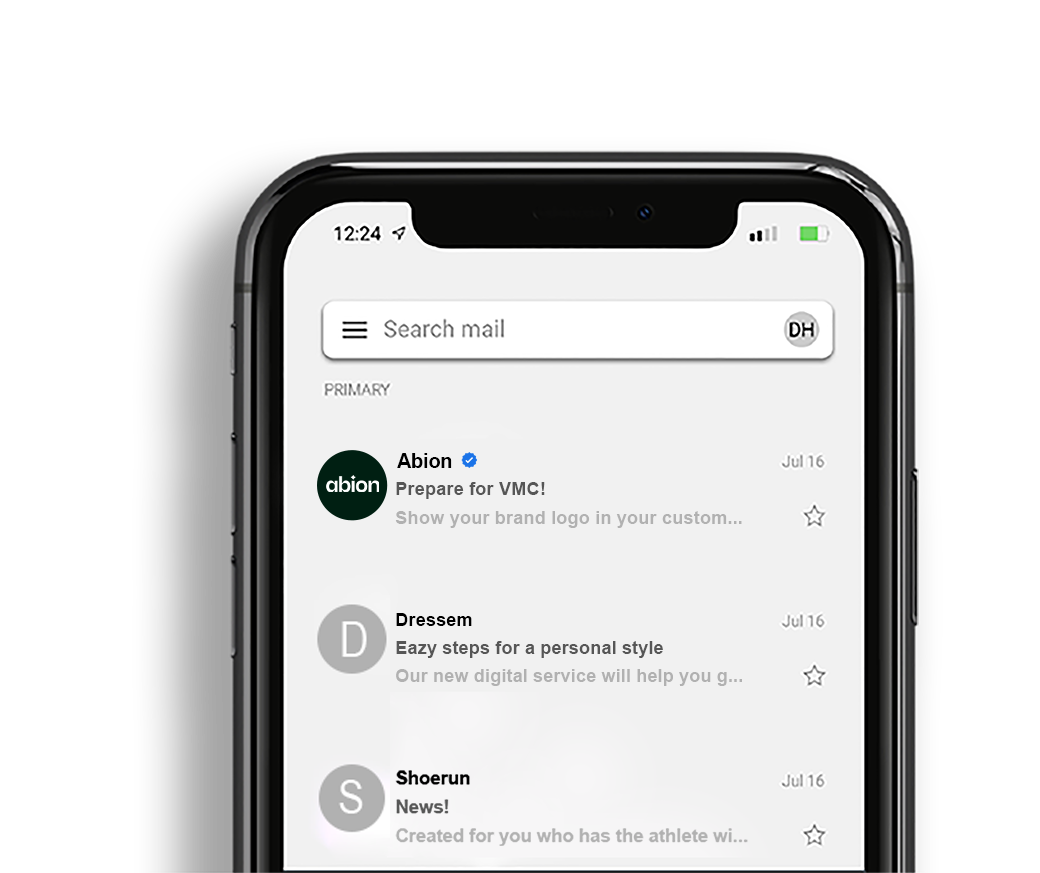
Increase open rate and brand awareness with a Verified Mark Certificate (VMC). A Verified Mark Certificate also enables your company to render both a Google Checkmark and your logotype next to your brand name in your customer’s email inbox. Contact us and we will help set it up!
Enhanced Recognition
The certificate showcases Google Checkmark and your logo in the inbox, helping it to stand out from the clutter.
Boost Open Rates
Implementing VMC and connected services can boost open rates by up to 39%.*
Increased Deliverability
VMC strengthens security against phishing and spoofing with DMARC enforcement which can increase deliverability by 5-10%.**
How Does a Verified Mark Certificate (VMC) Work?
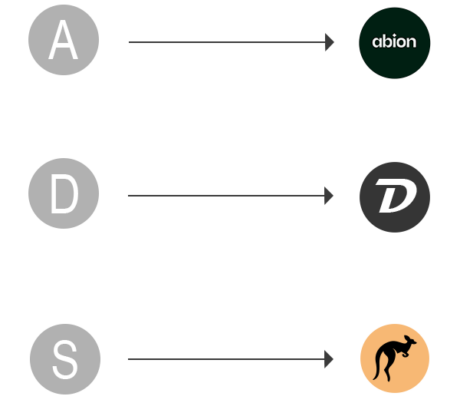
A Verified Mark Certificate (VMC) combines law and IT to revolutionize email infrastructure. With a VMC, you can showcase your logo in authenticated emails, thanks to the next phase of BIMI (Brand Indicators for Message Identification). The Verified Mark Certificate (VMC) legally confirms that your organisation has the right to use your logo, ensuring it’s protected and displayed with confidence.
Sources:
*Consumer Interaction with Visual Brands in Email from Red Sift & Entrust
**Digicert
Ensure All Requirements Before VMC Application
In order to obtain a certificate, you need to ensure that your figurative/word mark is properly registered and that your e-mail infrastructure has the right level of security protection.
Parts of the process may take time. A trade mark application usually takes 3-6 months and implementation of the required security levels for your email may take 1-3 months.
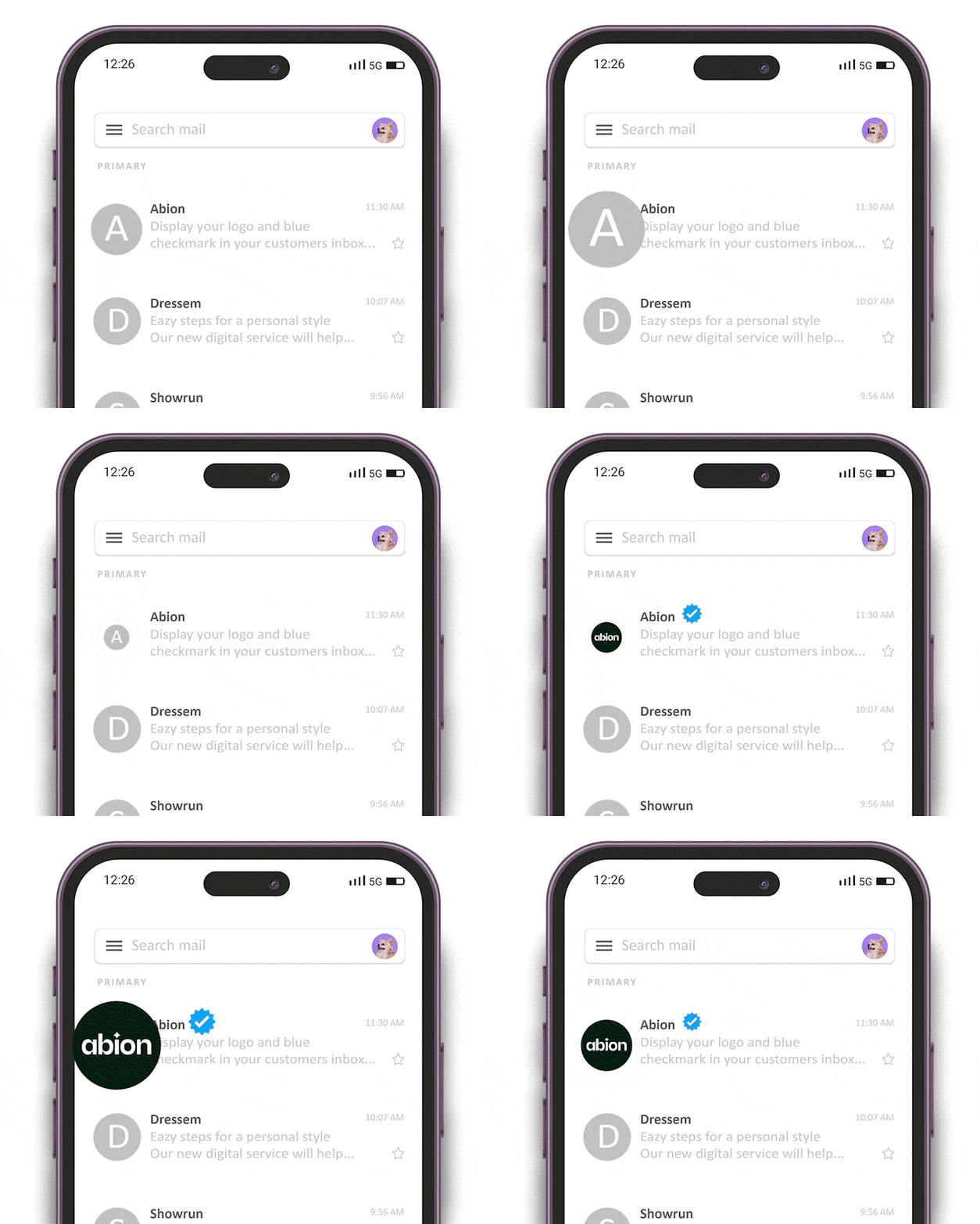
Which email would you open
- with or without logo?
Is your brand ready to rule the inbox?
Fill in the form and we will analyze how ready your brand is, with no strings attached.
- What logo you have registered
- If the logo is registered for the right markets
- The security levels on your email
Learn More: How to Secure VMC to Brand Your Emails
A VMC is a digital certificate that allows companies to display their verified (and trade marked) logo next to their emails, enhancing brand recognition, trust and security. With the requirement of DMARC compliance, this certificate solidifies brand authenticity and helps to protect against email spoofing.
Understanding Verified Mark Certificates (VMC)
VMC are digital certificates that enable organisations to display their registered trade marked logos in the avatar spot of outgoing emails, providing a visual cue that helps recipients verify the sender's authenticity. Working in conjunction with the organisation, Brand Indicators for Message Identification (BIMI), VMCs offer an immediate trust indicator, transforming how emails are perceived by making them more recognisable and trustworthy at a glance.
By placing a trade marked logo next to the sender field in recipients' inboxes, VMCs significantly enhance brand recognition and boost email engagement. They also help to prevent phishing attempts and email spoofing by ensuring that only authenticated emails can display these logos, adding an extra layer of security.
Supported by major email services like Google, Yahoo Mail, and Apple, VMCs are set to become a standard feature in email marketing and security strategies. This widespread support makes it crucial for brands to adopt VMC technology to stay ahead in the digital landscape.
Step-by-Step Guide to Acquiring a Verified Mark Certificate
Obtaining a valid certificate necessitates several crucial steps such as, achieving DMARC compliance, having a registered trade marked logo, and designing an SVG format logo. Each of these steps is vital to meeting the VMC requirements and successfully implementing your VMC. It can be a complex process and therefore advisable to seek the help of an expert in this area, like Abion, who can support you through this process.
Benefits of Using VMCs for Email Security and Brand Recognition
The benefits of VMCs extend well beyond email security. One of the primary advantages is the protection against email fraud through DMARC’s anti-spoofing technology. By ensuring that only authenticated emails can display your trade marked logo, VMCs help to prevent phishing attempts and reduces email spoofing. This not only safeguards your brand’s reputation but also bolsters employees’ confidence in the legitimacy of emails from internal senders or partners.
Moreover, brand recognition and email engagement are significantly bolstered by VMCs. Organisations using BIMI and VMC report increased engagement rates, with some companies seeing a boost in email engagement by approximately 10%. Preliminary findings also indicate that VMC-backed emails may have improved open and response rates by up to 39%.
User trust and engagement can also be elevated through the implementation of VMCs. By adhering to BIMI specifications, VMC-backed emails stand out in customer inboxes, leading to higher interaction rates and a more positive perception of your brand. Tracking detailed email metrics like open rates, link interactions, and forwarded emails becomes easier, providing valuable insights into your email marketing strategies.

Common Challenges and How to Overcome Them
Despite the evident benefits of VMC or mark certificate, their implementation can pose a number of challenges. These challenges include meeting technical requirements, navigating the trade mark registration process, and the time-consuming nature of obtaining a VMC.
Technical Requirements
A significant technical challenge in VMC implementation involves fulfilling all the necessary requirements of your email infrastructure. This includes achieving DMARC compliance and properly formatting your SVG logo. Ensuring that your email infrastructure is not on any blacklists is also essential for successful BIMI implementation. Technical hurdles like creating an SVG file that meets BIMI standards and configuring your email authentication records can be daunting, but they are essential for securing your VMC certificate.
To overcome these challenges, consider seeking assistance from experts. Ensuring that all technical requirements are met can take time, but it is a critical step in achieving the full benefits of VMC implementation. At Abion, we handle all steps of the process, so you can focus on your core business.
Trademark Registration Issues
Another common challenge when actualising VMC or mark certificate is the trade mark registration process. The process can be lengthy, in some cases taking anywhere between 3 months to over a year to complete. It is essential to consult with a legal department or lawyer to ensure timely and successful completion of the trade mark registration process. The ‘use-in-commerce’ requirement must also be met, meaning the logo must be actively used in commerce.
Partnering up with a brand protection specialist like Abion can significantly increase the chances of a successful trade mark application. They can help navigate the complexities of the application process, ensuring that your logo meets all necessary legal requirements and is ready for VMC certification.
Conclusion
In summary, securing a VMC certificate for your branded emails involves several critical steps, including ensuring DMARC compliance, registering your trade marked logo, and creating an SVG format logo. Despite the challenges, the benefits of enhanced email security, increased brand recognition, and higher email engagement rates make VMCs a worthwhile investment to transform your email communication strategy. While we have outlined the steps of how to obtain a VMC, working with an expert in these matters is strongly advised.
FAQ about Verified Mark Certificate
A domain is valued using a combination of comparable sales, keyword relevance, brandability, traffic, and market demand, not a single automated metric.
Key factors include keyword strength, length, memorability, extension, traffic, and comparable market sales.
Yes. Accurate valuation strengthens your position and helps achieve better outcomes in acquisition or sale negotiations.
WHOIS privacy helps protect sensitive ownership and contact information from being publicly visible. It is often used to reduce exposure to spam, fraud attempts, and targeted attacks. This service can also support stealth brand launches, as early domain registrations can signal a company’s strategic direction. However, it should be noted that WHOIS privacy is not available for certain TLDs due to registry requirements.
Effective portfolio management reduces risk, prevents domain loss, improves efficiency, and supports brand protection across all markets.
Yes. With global reach and local presence services, Abion manages domains and their top-level domains (TLDs) across international markets, including regions that require local entities, ensuring seamless registration and administration worldwide.
They provide a useful starting point but often lack the context and accuracy needed for real-world transactions.
Professional valuation provides a realistic price range based on current market conditions and strategic considerations.
Yes. We offer valuation and guidance for individual domains as well as full portfolio assessments.
Corporate domain management is the structured handling of domain registrations, renewals, transfers, and compliance for large organisations with complex portfolios.
We ensure all registrations, ownership data, and renewals meet ICANN and local registry requirements globally.
A structured approach to renewals, access control, monitoring, and secure ownership data helps reduce the risk of domain loss, unauthorised transfers, and domain hijacking.
Related services

Email Security Solutions – A Must For Any Serious Business