

You Posted It. Does that Mean Anyone Can Copy It?
- Firstpage
- IP & Trademarks
Being able to see, share and access content online does not necessarily mean being free to reproduce it. The CJEU’s recent judgment in Gândul Media Network highlights the distinction between copyright protection and the lawful reuse of publicly available content.
A caption, a LinkedIn post, a few carefully chosen words: a text does not have to be lengthy or formally published to attract copyright protection.
But the fact that content is protected by copyright does not, by itself, answer another important question: whether someone else may lawfully reproduce it.
That distinction lies at the heart of the Court of Justice of the European Union’s judgment of 3 September 2026 in Case C-598/24, Gândul Media Network. The case concerned a Facebook post that an online newspaper had reproduced in full without the author’s prior consent. It raises a familiar question in today’s content economy: when does sharing publicly available information become copying protected expression?
“The judgment is particularly interesting because it separates two questions that are often conflated in the online environment: whether a text is protected and whether a particular use of it is permitted.”

When is a Short Social Media Post Protected?
The Court recalled that copyright protection requires an original work reflecting the author’s own intellectual creation and expressed in a form identifiable with sufficient precision and objectivity.
For written texts, originality may arise from the author’s selection, arrangement and combination of words. In other words, copyright does not depend on a text being lengthy, sophisticated or traditionally “literary”. A short text can qualify if it reflects the author’s free and creative choices.
This means that neither the brevity of a text nor its publication on a social network prevents it from satisfying the requirements for copyright protection. At the same time, publication on social media does not automatically make a text original. The assessment remains specific to the work in question and depends on the creative choices expressed in it.
Ultimately, whether a particular text meets the requirements for copyright protection remains a matter for the national court to determine.
Protection is Not the Same as Permission to Reuse

The judgment is particularly interesting because it separates two questions that are often conflated in the online environment: is the content protected by copyright, and is a particular use of that content permitted?
The first question concerns the nature of the work and whether it meets the requirements for copyright protection. The second concerns the particular act of reproduction and whether it falls within an applicable exception or limitation to copyright.
The distinction matters because even where a text is protected, copyright does not necessarily prevent every use of it. EU copyright law recognises certain exceptions, including an exception relating to the reporting of current events.
The Court considered the scope of that exception in the context of the newspaper’s reproduction of the Facebook post. Reliance on the reporting exception requires the extent of the reproduction to be justified by the informational purpose of the use. Reproducing an entire post therefore requires a contextual assessment; the fact that the original is short does not automatically justify reproducing it in full.
Nor does the commercial nature of a newspaper’s activity, in itself, exclude reliance on the exception. What matters is whether the conditions of the relevant exception are satisfied in the circumstances of the particular use.
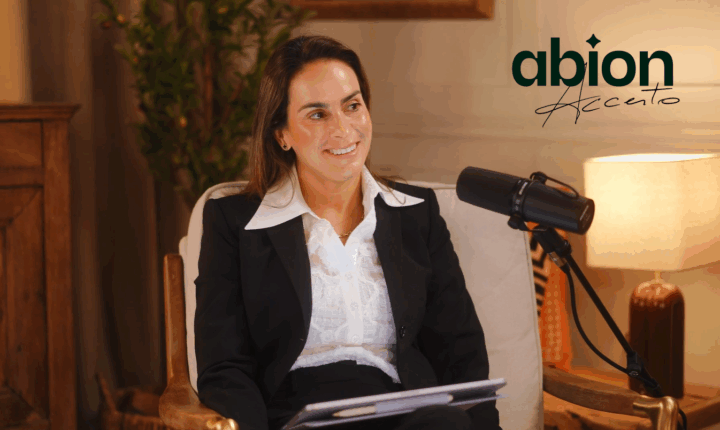
Luisa Grillo's Comment
“The judgment is particularly interesting because it separates two questions that are often conflated in the online environment: whether a text is protected and whether a particular use of it is permitted.
At the protection stage, the focus is on the author’s creative choices, rather than the format, length or perceived literary value of the text. At the use stage, the analysis shifts to the purpose and extent of the reproduction and the conditions of the relevant exception.
The reporting exception is therefore neither a blanket permission to reproduce material found online nor a privilege reserved to non-commercial publishers. It requires a contextual assessment of the informational purpose and compliance with the three-step test, including whether the use conflicts with the normal exploitation of the work or unreasonably prejudices the author’s legitimate interests. Attribution is one condition of the exception; it cannot substitute for that wider assessment.”
What Does this Mean for Businesses and Creators?
The judgment offers a useful reminder for anyone working with content online. The fact that something is publicly accessible does not mean that it is free to copy.
For brands, creators and communications teams, access to content, copyright protection and permission to reuse it are separate questions.
Before incorporating someone else’s post into an article, campaign or other communication, it is therefore worth considering three things: what exactly is being reproduced, how much of it needs to be reproduced, and what legal basis permits the use.
The answer will depend on the circumstances. Sometimes the material may not qualify for copyright protection in the first place. In other cases, permission may be required. In still others, a copyright exception may apply, provided its conditions are met.
The key point is that none of these questions is answered simply by the fact that the content is sitting in public view on a social media platform.
Publicly available does not automatically mean free to reuse.
Image
Photo by Ingmar on Unsplash

Contact us
Do you want consulting, advice or are interested in any of our legal services? Contact us and we will help you!