


Chris Stussy Becomes Chris Stassy: When Your Name is Also Your Brand
- Firstpage
- Legal Case Files

What happens when an artist’s name becomes a brand, and runs into someone else’s trade mark? Chris Stussy’s move to Chris Stassy offers a fascinating case study in names, trade marks and the limits of the own-name defence.
Over the past few years, the Dutch DJ Chris Stussy has become one of the biggest names in electronic music, which makes changing that name now a bit unusual.
After performing as Chris Stussy for around 16 years, he announced this week that he will now be known as Chris Stassy. One letter has changed, although he says that the pronunciation should stay the same.
Whilst the specific reasons for the name change have not been confirmed, we are aware that Chris Stussy was involved in an EU trade mark dispute with the well-known STUSSY clothing brand.
Chris Stussy applied to register CHRIS STUSSY as an EU trade mark in 2024 (EUTM No. 019094646). That application was opposed by Stussy, Inc. on the basis of its earlier STUSSY rights, and the application was since withdrawn.
A new application for CHRIS STASSY was filed in the Benelux on 5 May 2026 and proceeded to registration on 28 July 2026. A corresponding EU application, EUTM No. 019403590, was subsequently filed and is now progressing through publication.
The public announcement of the rebrand therefore came only after the new CHRIS STASSY mark had secured registration in the Benelux.
That does not necessarily tell us what happened between the parties behind the scenes, or the precise reason for the eventual name change, but it does make the timing interesting.
Whether that timing was deliberate is not something we can know from the register alone. What the register does show, however, is a clear transition from an opposed CHRIS STUSSY application to a new filing strategy built around CHRIS STASSY.
And that raises an interesting wider question: what happens when the name you have built your career around runs into somebody else's trade mark?
I have a particular soft spot for this one, having seen Chris Stussy play in Ibiza, albeit I was not giving much thought to clearance searching and own-name defences at the time.
Can You Trade Mark Your Own Name?
The short answer is, yes.
Personal names can function as trade marks just like other words. Think FORD, McDONALD'S, LOUIS VUITTON or the copious amount of sports people who use their name as trade marks, e.g. DAVID BECKHAM.
But having a particular name does not give you an automatic right to register it.
The EU General Court provided a useful reminder of this in the RADA/PRADA case. An application for RADA PERFUMES was opposed by PRADA, with the applicant arguing, among other things, that Rada was the first name of its founder.
The Court confirmed that there is no unconditional right to register a personal name as a trade mark. If your name is sufficiently similar to somebody else's earlier mark for the relevant goods/services, the usual rules still apply.
In other words, producing your birth certificate is not a complete answer to a trade mark opposition.
But Surely You Can Use Your Own Name?

This is where things become more interesting.
UK and EU trade mark law contain what is commonly called the “own-name defence”. Broadly speaking, a trade mark owner cannot necessarily prevent a natural person from using their own name in the course of trade.
But the use must be in accordance with honest practices in industrial or commercial matters.
The defence is also now essentially limited to natural persons. A company cannot simply adopt its founder's name and assume that it benefits from the same protection.
There is also an important distinction between using a name and registering it as a trade mark. The own-name provisions may limit what an earlier trade mark owner can prevent, but they do not give someone an unconditional right to obtain their own registration.
This Brings Us to Chris Stussy
And this is where we have a slight complication compared to a standard trade mark application.
Chris Stussy isn't actually called Chris Stussy.
His real name is Niels Christian Steenbergen. Chris Stussy is the professional name under which he has built his career. That distinction matters.
The rationale behind the own-name defence is easy enough to understand where someone is simply using the name they were born with. The position is rather different where the potentially conflicting name was chosen as a stage name or professional alias.
A pseudonym can become hugely valuable and may form an important part of someone's public identity. But adopting it does not necessarily give that person the same freedom to use it that they might have had with their actual name.
The history of the CHRIS STUSSY application provides a useful real-world illustration of that point. The fact that a name has been used professionally for many years does not, by itself, create an automatic entitlement to register it where earlier rights stand in the way.
For musicians, DJs and influencers increasingly building businesses around professional names, that is worth bearing in mind.
When an Artist Becomes a Brand
There is a broader trade mark point here which goes beyond this particular dispute.
Artists increasingly operate as brands in their own right. A DJ's name might start life as the name on a club line-up, but over time that same name can appear on records, events, collaborations, licensing deals and, inevitably, merchandise.
Suddenly, the artist is no longer only providing entertainment services. Their name may also be appearing prominently on T-shirts, caps, bags and other products.
That matters because the commercial boundaries between industries are not always as neat as the trade mark register might suggest. Fashion brands can move into music and entertainment, while musicians increasingly move into fashion, merchandise and broader brand collaborations.
Stüssy itself is a good example of that crossover. Although best known as a clothing brand, it has longstanding connections with music and has collaborated with artists including Gang Starr, Eric B. & Rakim, Portishead and Talking Heads, including on clothing incorporating artists' music, imagery and identities.
And the new CHRIS STASSY filing shows just how broad an artist brand can become. The Benelux registration does not cover DJ services alone. It extends across seven classes, including bags in Class 18, clothing in Class 25, merchandising and retail services in Class 35, and DJ/music/entertainment services in Class 41.
That is a useful reminder that an artist name may eventually need to function as a trade mark across a much wider commercial footprint than music alone.
Trade Mark Searches Require a Little Imagination
This is perhaps the wider lesson. When conducting a trade mark search, the question should not always be limited to:
“What are we selling today?”
It can be equally important to ask:
“What might we realistically want to sell tomorrow?”
An emerging musician may initially care only about music and entertainment services. Five or ten years later, they may have a record label, events business, clothing range and international licensing programme.
A name that presented an acceptable level of risk for the original business may look very different once those plans expand.
The same applies from the perspective of established trade mark owners. A third-party use in what initially looks like a remote commercial field can become much more relevant if that business starts moving towards your own.
It is also why clearance is about more than simply finding an earlier registration. Older marks may be subject to proof-of-use requirements, while the commercial relationship between the parties may be much more important than the class numbers sitting on the register.
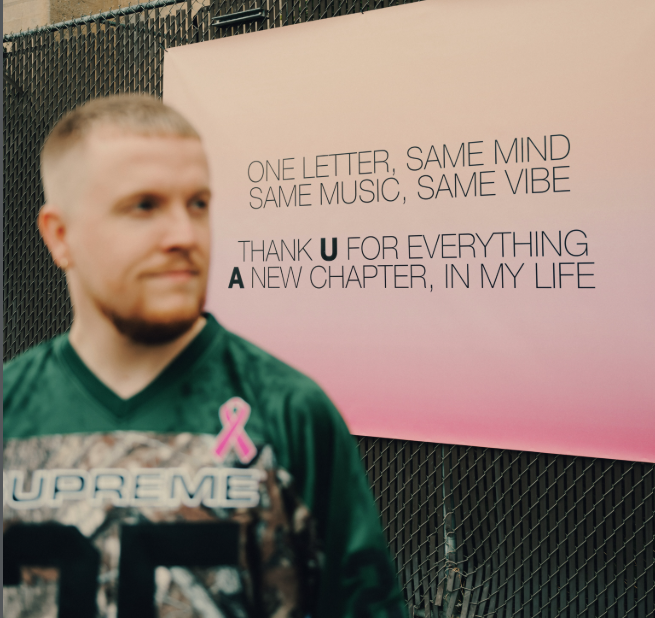
One Letter Can Make All the Difference
Whilst we don’t know the extent of settlement discussions, if any, between STUSSY and Chris Stussy, the sequence provides a useful reminder that a name is not legally untouchable simply because somebody uses it as their identity.
Personal names can be registered as trade marks. They can conflict with earlier rights. The own-name defence is qualified rather than absolute. And an adopted professional name can create an additional complication where it conflicts with somebody else's mark.
For artists in particular, there is a broader commercial lesson too.
The name that starts out on a club flyer may eventually end up on clothing, products, collaborations and licensing agreements around the world.
That makes it worth thinking about trade marks sooner rather than later.
As for Chris (Stussy) Stassy, one letter may not sound like much, but in trade mark terms it can be enough to change the picture.

Contact us
Do you want consulting, advice or are interested in any of our legal services? Contact us and we will help you!