


Trade Marking Your Face: Strategy in the Age of AI
- Firstpage
- IP & Trademarks
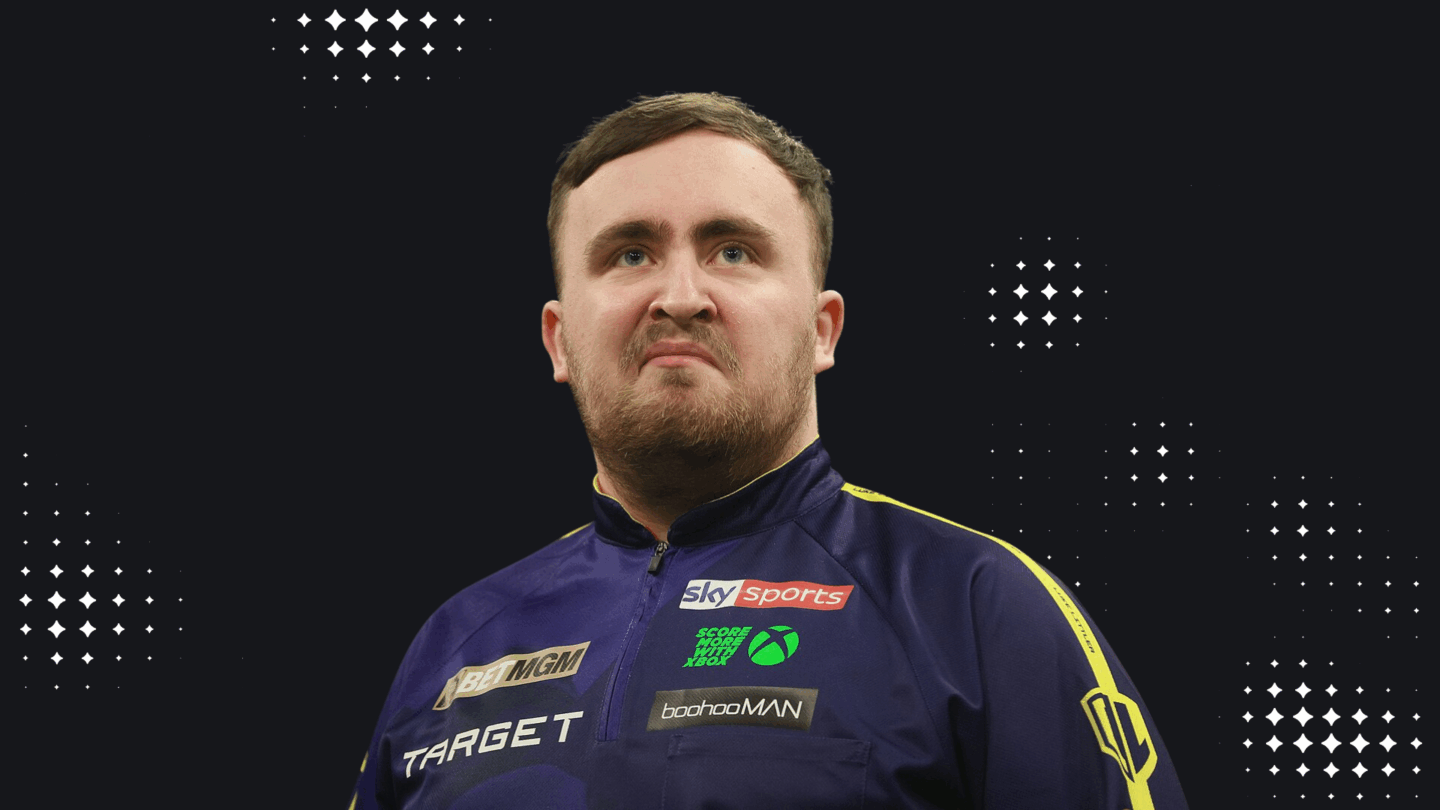
Recent coverage of Luke Littler’s latest trade mark filing for an image of his face has sparked predictable headlines, and a fair amount of confusion.
The idea of trade marking a face can still feel novel, and in some eyes, even slightly indulgent. In reality, it reflects something much more straightforward: as AI-generated content becomes more sophisticated, individuals, particularly those in the public eye, are looking for clearer ways to control how their image is used commercially.
From Names to Faces
For years, athletes and celebrities have protected their names, nicknames and logos through trade marks. Face marks themselves are not new, but the rationale behind them is shifting.
A name protects how you are referred to. A logo protects how you are presented. A face, increasingly, protects how you are recognised.
That progression is not accidental. It reflects how personal brands are actually consumed, particularly in an environment where algorithms are constantly surfacing, repackaging and reusing content tied to recognisable individuals.
Why This is Happening Now
AI has fundamentally shifted the landscape. What has changed is not the availability of this type of protection, but the commercial need for it.
It is now possible to generate highly realistic images of individuals and attach them to products, endorsements or entirely fictional scenarios in a matter of seconds. The barrier to entry has dropped dramatically - and with it, the risk of unauthorised commercial use.
At the same time, the UK still does not recognise a standalone “image right”. Protection exists, but it is fragmented across passing off, copyright and other rights.
Trade marks are therefore being used as a practical way to bridge that gap. Not perfectly, but often effectively.
What a Face Trade Mark Actually Does
Trade marking a face does not give someone ownership over their image in the abstract.
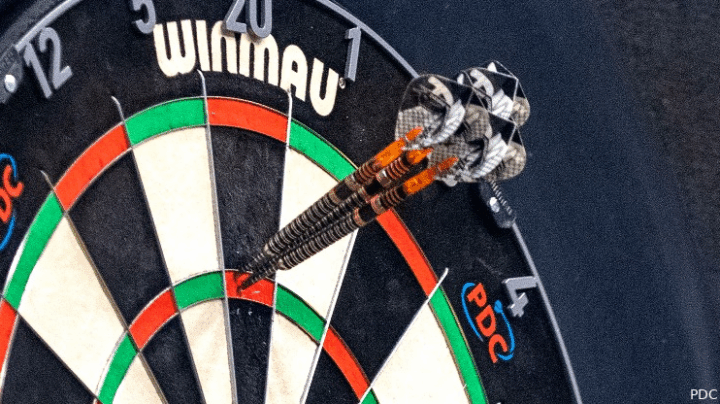
In practice, this gives them a commercial right: the ability to control how that image is used as a badge of origin. In other words, whether it is being used to sell something.
That distinction matters.
A registered face mark can be a powerful tool where a likeness is used to promote goods or services, whether that is on merchandise, in advertising, or increasingly, in AI-generated endorsements that were never agreed to in the first place.
What it does not do is control visibility. It will not stop news coverage, commentary, or someone sharing an image online. Nor will it neatly resolve parody or satire.
In short, it targets commercial exploitation, not general use.
The Real Hurdle: Distinctiveness
The more interesting question is not whether face marks are possible, but when they work in practice.
Trade marks depend on recognition. The relevant public must see the image and understand it as indicating a particular commercial source.
Recent EUIPO practice shows how this is evolving, and not always consistently. That is perhaps unsurprising given that some of these applications date back nearly a decade, but are now being assessed against a very different commercial backdrop.
An application to register the face of a professional model was initially refused on the basis that consumers would simply see it as a representation of a person, rather than a badge of origin (Puck Schrover – EUTM No. 0188645324). However, that decision was overturned on appeal (Case R 2173/2023-4), with the Board of Appeal taking a more pragmatic and commercially grounded approach.
The Board accepted that a portrait-style image can, in principle, function as a trade mark where it is capable of distinguishing one undertaking from another. Crucially, it moved away from the idea that a face must have particularly striking or unusual features to be registrable.
That shift in emphasis matters in practice. It suggests that the focus is not on whether a face is inherently distinctive in the abstract, but whether it can operate as a recognisable identifier in a commercial context.
From a practical perspective, registration is not limited to highly stylised images or universally recognisable figures. However, it also underlines that success will still depend heavily on how the mark is used in the real world. If the public is unlikely to perceive the image as indicating commercial origin, objections are still likely.
We are also seeing a more pragmatic approach at national level. For example, a facial image trade mark associated with Cole Palmer was accepted by the UKIPO in 2025, illustrating that, in the right circumstances, these types of marks can proceed to registration.
The takeaway is straightforward: the door is open, but recognition and use remain critical.
For well-known individuals, that hurdle is increasingly manageable. For most others, it remains a significant barrier.
What to Watch: The Next Key Decision
The law in this area is still developing, and further guidance is expected.
A case currently pending before the EUIPO’s Grand Board of Appeal concerns an application to register an image of Jan Smit’s face (Jan Smit is a Dutch singer/actor), EUTM No. 014711907 / Case R0050/2024-G.
Interestingly, the original application dates back to 2015. Seen in that context, the initial refusal is perhaps unsurprising, it was assessed in a very different commercial and technological landscape, long before the current wave of AI-generated content and the heightened focus on image control.
What makes the case particularly interesting is that it has worked its way through the EUIPO system and appeals process in parallel with the rapid rise of AI. In many ways, the legal question has remained the same, but the commercial context around it has changed dramatically. What may once have seemed like an abstract question about registrability now has very real practical implications.
The application was refused at first instance on the basis that a realistic facial image, without stylisation or accompanying elements, would be perceived by consumers as decorative or promotional rather than as an indication of commercial origin. The case has since been escalated to the Grand Board of Appeal to address inconsistencies in how similar marks have been assessed.
From a practical perspective, this is one of the more significant cases to watch.
The Grand Board is expected to provide clearer guidance on where the line should be drawn, in particular, whether a straightforward photographic likeness can be inherently distinctive, or whether applicants will generally need to rely on evidence of use to establish that their image functions as a trade mark.
For brand owners, the outcome will matter less as a point of legal theory and more in terms of filing strategy. A stricter approach would push applicants towards stylised imagery or stronger evidence of use. A more permissive approach would open the door to broader protection for personal likenesses at an earlier stage.
Either way, the direction of travel is clear: this is an area moving towards greater recognition of personal image as a commercial asset, but where the boundaries are still being actively defined.
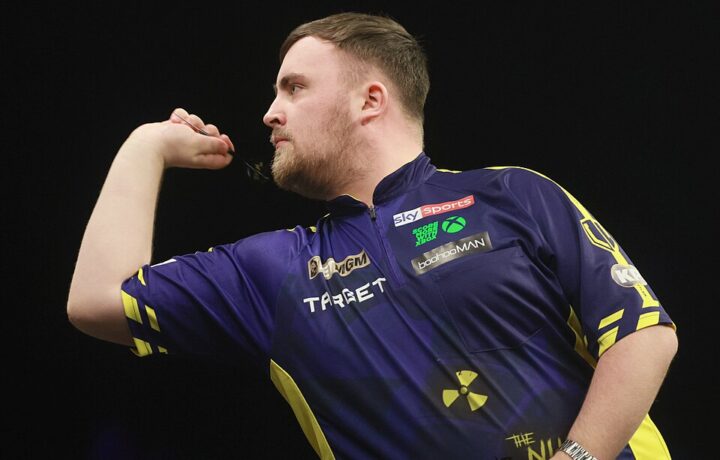
Celebrities, AI and the Reality of Enforcement
So where does this leave enforcement in practice?
Trade marks can play an important role, particularly where AI-generated content crosses into commercial use. If an image is being used to sell, promote or imply endorsement, a registered right gives a clear basis for challenge.
This distinction is not new. Many will remember the era when Topman had us all wearing celebrity graphic t-shirts, none more so than the now-famous Rihanna tee. In that case, the court’s concern was not the image itself, but the impression that she had endorsed the product. That same principle continues to underpin how these cases are approached today, even if the medium has shifted from t-shirts to AI-generated content. A registered trade mark covering her likeness would not have changed the analysis, but it may have made the route to enforcement more straightforward.
That said, trade marks are not a silver bullet. In many cases, particularly those involving parody, impersonation or low-level misuse, the most effective route is still a platform takedown. Social media platforms and website hosts will often act on reports of misleading or infringing content, especially where there is a clear commercial element.
Despite the negative press they often receive, social media platforms (some more than others) can be receptive to well-founded takedown requests, particularly where there is a clear misuse of a person’s likeness in a commercial context.
Where misuse extends beyond content, for example, impersonation websites or phishing activity, domain registrars can also be an effective route, with the ability to suspend or disable an entire domain.
Having registered rights can help. It demonstrates that the individual has taken steps to protect their brand and can lend weight to a complaint. Much of the day-to-day reality of enforcement, however, sits outside formal legal proceedings.
In practice, rights are used in combination. Trade marks, passing off, copyright and platform mechanisms each have a role depending on the scenario.
Types of Use
One of the most important distinctions in this space is the type of use.
Where a likeness is used commercially, to sell a product, promote a service or suggest endorsement, there is usually a clear path to challenge.
Where it is used editorially, for reporting or commentary, the position is very different. That type of use generally falls outside the scope of trade mark control.
Parody and satire sit somewhere in between. Legally messy, fact-specific, and rarely resolved through trade marks alone.
Understanding that distinction is often the difference between a realistic enforcement strategy and an expensive dead end.
What Comes Next?
If trade marking names and faces has become more common, the next phase is already taking shape.
We are seeing increasing focus on other identifiable elements of personal branding, signatures, gestures, celebrations, stylised imagery and even digital avatars.
In other words, anything that consumers recognise and associate with a particular individual is a candidate for protection.
Some of these will succeed. Others may be a stretch. There are limits to what can realistically function as a trade mark.
A Shift in Mindset
Ultimately, this is less about novelty and more about mindset.
Public figures are increasingly treating their identity as a commercial asset, something that can be licensed, monetised and where necessary, enforced.
Trade marking a face may still attract headlines, but it is not new. What is changing is how, and why, these rights are being used.
And in an AI-driven landscape where identity can be replicated with ease, that shift is not just logical, it is increasingly necessary.

Photo credit
Sandro Halank / Wikimedia Commons
Contact us
Do you want consulting, advice or are interested in any of our legal services? Contact us and we will help you!