


Swissness for Services: Court Sets Clear Compliance Standards
- Brand protection
- Firstpage
- IP & Trademarks

“Swiss” stands for quality, trust, and reliability, but who is actually allowed to use it? A landmark court decision now clarifies what businesses must prove before marketing their services as Swiss.
Background
The use of national designations such as “Swiss” and the Swiss cross is strictly regulated under the Swiss Trademark Protection Act (MSchG). Given the substantial commercial value of Switzerland’s reputation and the high degree of consumer trust associated with Swiss origin claims, only companies with a genuine and substantial economic connection to Switzerland are entitled to incorporate them into their branding and corporate identity.
On August 26, 2025, the Commercial Court of Bern delivered a decision (1) in proceedings between the Swiss Federal Institute of Intellectual Property (IPI) and BDSwiss AG, an internationally active provider of online financial services registered in Zug. It is the first court judgment concerning Swissness criteria for advertising services.

Although formally domiciled in Switzerland, incorporating the Swiss cross into its logo, and using “Swiss” in its name, BDSwiss AG conducted its substantive business operations and management abroad, with its services primarily targeting clients outside Switzerland rather than focusing on the domestic market.
Despite repeated requests from the IPI to cease using the designation “Swiss” and the Swiss cross, the company continued to display them and present itself as a Swiss company. The IPI therefore initiated civil legal proceedings challenging the continued use of these elements.
The Legal Framework of “Swissness”
“Swissness” refers to the statutory framework regulating the use of Swiss origin indications such as “Swiss,” “Made in Switzerland,” and the Swiss cross in relation to goods and services. These indications signal to consumers that a product or service genuinely originates from Switzerland and meets legally defined criteria.
The revised Swissness legislation entered into force on January 1, 2017. It was enacted in response to the growing misuse of Swiss origin references, which threatened to undermine the value of the “Swiss Made” label and distort competition. Under the new legislation, Swiss origin claims must be supported by genuine economic activity in Switzerland.
While this case concerns services under Article 49 MSchG, Swissness rules also apply to goods. For products, however, the criteria differ significantly and focus primarily on manufacturing location, value creation thresholds, and the place of essential production steps pursuant to Article 48 MSchG.
Legal Requirements for Designating Services as “Swiss’”, Article 49 MSchG
The use of a national origin designation, such as “Swiss,” in relation to services is strictly regulated under Article 49 of MSchG (2). A service may be designated as Swiss only if two cumulative conditions are satisfied:
- the provider must have its registered office in Switzerland
- and there must be a genuine place of effective management within Switzerland
Both conditions are mandatory and must be met simultaneously.
Under paragraph 3 of the same article, any additional requirements, such as compliance with customary or prescribed principles for the provision of the service or the traditional connection of the person providing the service with the country of origin, must also be met.
The Role of the IPI
The IPI monitors potential misuse, responds to complaints, and may initiate civil or criminal proceedings to protect Swiss origin indications. The BDSwiss case highlights the IPI’s active role in ensuring these indications are used correctly.
By bringing the case to court, the IPI demonstrated its commitment to enforcing the Swissness criteria under Article 49 MSchG. The judgment confirms that these requirements are applied strictly, especially when services are offered internationally under a Swiss designation.
The Court’s Findings
While BDSwiss AG had its registered office in Zug, the court found that its management was based abroad. Only two of its 228 employees worked in Switzerland, operational services and the trading platform were managed from outside, incoming mail was handled externally, and the company could not prove it held the licenses or authorisations required to provide financial services in Switzerland.
The Bern Commercial Court accepted the IPI’s argument that, in the financial services sector, relevant consumers would reasonably expect a company presenting itself as “Swiss” and using the Swiss cross to be subject to Swiss regulatory supervision and to hold the necessary Swiss authorisations.

Accordingly, the court held that the additional requirements under Article 49 paragraph 3 MSchG were not fulfilled. The use of “Swiss” and the Swiss cross in the company name, logo, domain name, and website constituted a misleading indication of source within the meaning of Article 47 paragraph 3 letter a MSchG.
The court ordered BDSwiss AG to remove the word “Swiss” from its company name and the Swiss cross from its logo. It gave the company three months to change its branding.
Previously, the BDSwiss logo strongly emphasised a Swiss identity. It displayed the name “BDSwiss” in a bold font, accompanied by a white cross on a red background inspired by the Swiss flag.
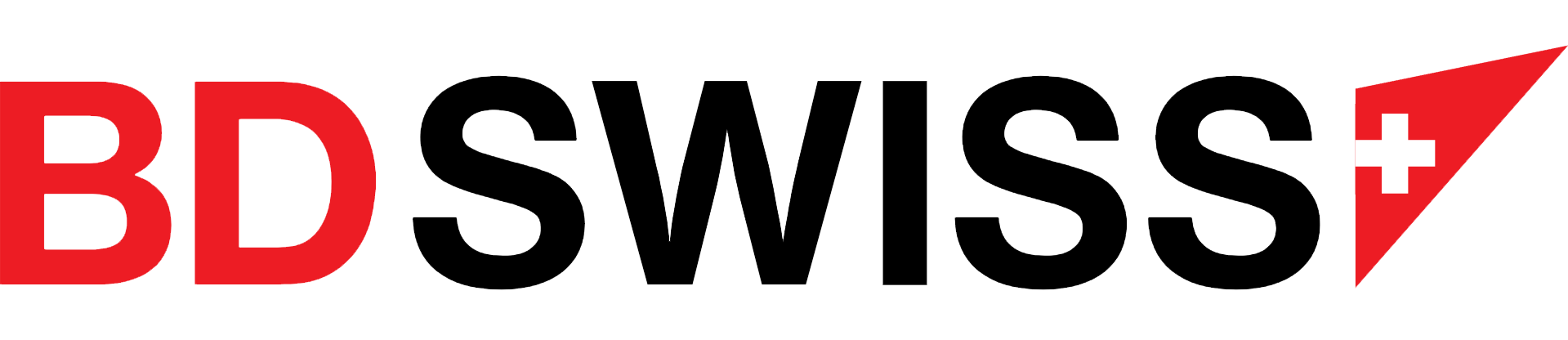
BDSwiss AG has, in the meantime, rebranded to BDS Markets. While the cross on the stylised flag remains, it now features a green background.

However, on its website, the name “BDSwiss” can still be found in several places. For example, in the website header and the “About Us” section. The same applies to its domain name, which remains BDSwiss.com.
Why This Decision Matters – Practical Implications for Businesses
This ruling constitutes a significant judicial clarification of the Swissness framework as applied to services. It is the first comprehensive court decision since the 2017 reform to rigorously examine and confirm the cumulative requirements under Article 49 MSchG.
The judgment makes clear that Swiss origin claims must reflect economic reality. A mere registered office, mailbox, or formal incorporation in Switzerland is insufficient. Companies invoking “Swiss” or using the Swiss cross in connection with services must demonstrate:
- A genuine operational presence in Switzerland;
- Effective management and decision-making taking place in Switzerland; and
- Compliance with sector-specific regulatory requirements where applicable.
The court confirmed that additional expectations under Article 49, paragraph 3 MSchG must also be met. In regulated sectors in particular, consumers may reasonably expect that a company presenting itself as “Swiss” is subject to Swiss supervision and holds the necessary authorisations. Failure to meet these expectations may render the use of “Swiss” misleading within the meaning of Article 47 MSchG.
The decision reinforces that Swissness is not a marketing device but a legally protected indication of origin. The rules serve both consumer protection and fair competition by ensuring that origin claims accurately reflect a company’s economic and organisational substance.
Get in touch with our experts
Abion can provide expert guidance on how Swissness rules may affect the use of Swiss origin claims, particularly in sectors where such claims are highly sensitive.
Feel free to reach out to daniel.zohny@abion.com, Country Manager Switzerland – Partner and Global Co-Head of Brand Protection.
Photo credit
kavalenkava via Freepik
Omar M via Unsplash
Footnotes
(1.) Bern Obergericht Handelsgericht 26.08.2025 HG 2025 33
(2.) Federal Act on the Protection of Trade Marks and Indications of Source

AUTHOR
Bianca Degtyarev
Intellectual Property Intern
Contact us
Do you want consulting, advice or are interested in any of our legal services? Contact us and we will help you!