


How The Polo/Lauren Company Shut Down a Copycat in Malaysia
- Firstpage
- Legal Case Files

Summary Judgment when identity and similarity infringements are established with no triable issues.
The dispute
The High Court of Malaya judicially clarified grant of summary judgment in trade mark infringement actions in a dispute involving global fashion company The Polo/Lauren Company L.P. (“Plaintiff”) of the well-known “POLO” mark and “Polo Player Device” marks for clothing in Class 25 against RCB Marketing Sdn Bhd (“Defendant”).
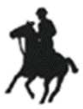
The Defendant used an unregistered “POLO” sign on clothing identical to the Plaintiff’s registered “POLO” mark and unregistered “Polo Player device” signs similar to the Plaintiff’s registered “Polo Player device” marks, also on clothing. The Plaintiff applied for summary judgment anchored on the grounds of “identity infringement” by Section 54(1) and “similarity infringement” by Section 54(2)(b) of the Trade Marks Act 2019.
The Defendant’s only registered mark no. 2016069124, “polo player with a mallet with letters RCBPC”, was not part of the dispute.
Registered and Unregistered Marks
Plaintiff’s registered marks in Class 25 for clothing
Defendant’s unregistered signs on clothing

Registration No. 95009319 in Class 25 (“POLO” word mark)

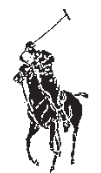
Registration No. M/097832 in Class 25
AND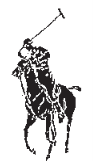
Registration No. 95009325 in Class 25
(“Polo Player Device” marks)


Registration No. 2016069124 in Class 25p>



Identity infringement: when the mark is identical
Section 54(1) identity infringement provides that infringement occurs where a person, without the consent of the proprietor, uses in commerce a sign that is identical to the registered trademark for goods or services identical to those for which the mark is registered. The Defendant’s POLO sign was identical to the Plaintiff’s registered POLO word mark and their goods were identical in nature to the Plaintiff’s Class 25 goods. These were undisputed. The High Court emphasised that where both the sign and the goods and/or services are identical, infringement is established as a matter of law without having to prove likelihood of confusion.

The Court further emphasized that it is prima facie appropriate for identity-based infringement actions, particularly those involving exact reproduction of the registered mark, to be determined by summary judgment where the defendant fails to raise any viable defence.
The Defendant sought to resist summary judgment by arguing that the “POLO” mark was generic and lacked distinctiveness. The Court rejected this, noting that the Plaintiff’s longstanding registrations enjoyed a presumption of validity under Section 53, and no counterclaim for invalidity had been filed, adding that the possibility that a mark might be challenged for invalidity does not constitute a defense to infringement of a current valid registration.
The Defendant’s argument also could not stand as in adopting a mark identical to the Plaintiff’s POLO mark for commercial advantage it was logically inconsistent to deny its capacity to distinguish.
Similarity infringement: when confusion is likely
Section 54(2)(b) similarity infringement governs similar signs used in relation to identical or similar goods, where such use gives rise to a likelihood of confusion, requiring proof of similarity of marks, similarity of or identical goods and/or services, use in commerce without consent, and a likelihood of confusion among a substantial portion of the relevant public.
Applying the established tripartite visual, aural, and conceptual tests, and overall impression given by the marks, the Court found the Defendant’s Polo Player device signs bore substantial similarity to the Plaintiff’s registered Polo Player device marks.
The similarities were sufficient to create a real likelihood of confusion, particularly since the goods were identical or highly similar and were marketed within the same commercial sphere. The Court reiterated that actual confusion need not be demonstrated, it is sufficient to show that confusion to a substantial segment of the relevant public is likely and not merely speculative.
An additional factor that weighed in favour of the Plaintiff was their commercial strength and longstanding use of their marks in Malaysia since 1989 with evidence of substantial revenue. The Court ultimately concluded that the requirements of Section 54(2)(b) had been satisfied.
The verdict
In the absence of viable defence and no bona fide triable issue raised by the Defendant, and in the absence of authorisation from the Plaintiff to use marks identical and similar to the Plaintiff’s registered marks, the Court granted summary judgment.
Key findings:
- In identity infringement, where both the mark and goods and/or services are identical, likelihood of confusion need not be proven.
- Identity-based infringement is prima facie suitable for summary judgment where no viable defence is raised.
- In similarity infringement where the signs are visually, aurally, and conceptually similar to registered marks, and the goods and/services were identical or highly similar, actual confusion need not be proved.
Photo credit
Dino Sabic via Unsplash

Contact us
Do you want consulting, advice or are interested in any of our legal services? Contact us and we will help you!